
Tap water in Japan is safe to drink straight from the tap.
Looking around the world, this is by no means a given. There are very few countries where you can drink water straight from the tap. Most Japanese people take for granted the everyday convenience of being able to turn on the tap and have clean water come out.
However, we hardly ever stop to think about where that water comes from or how it gets here.
Water falls from the sky. It accumulates on the mountains as rain and snow, seeps into the ground, and flows as rivers towards the sea. It then forms clouds once more and returns as rain. It is as a result of this cycle, which has continued for thousands of years, that water still flows from our taps today.
No one is in charge of that cycle. There are mountains, soil and rivers, and it is this cycle that carries the water. We humans are simply riding on that cycle and making use of the water it provides.
When we reflect on this fact, we realise that water, too, is something entrusted to us.
Water has shaped our culture.
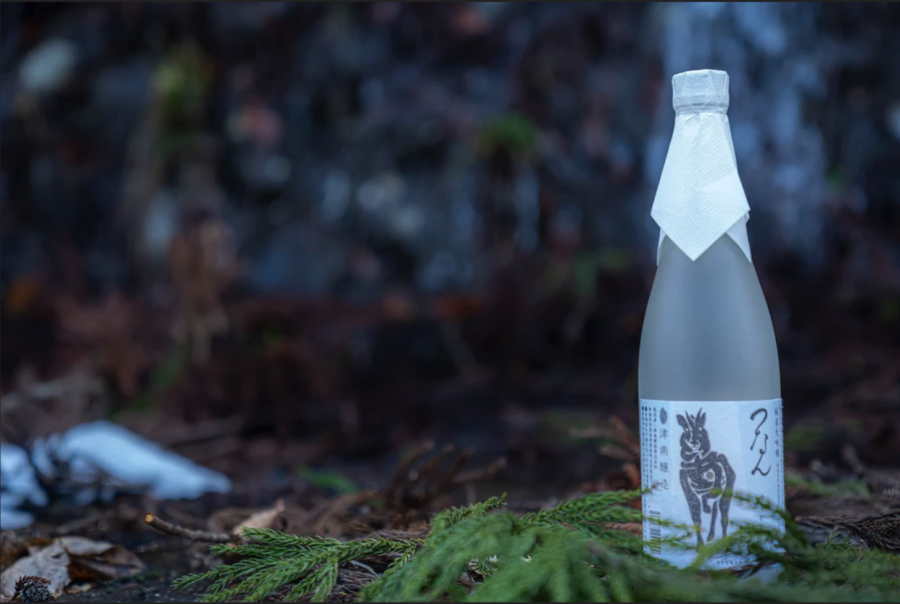
Sake brewing, too, is a culture born of water.
In the Nada district of Hyogo Prefecture, there is a type of water known as ‘Miyamizu’.
This is hard water that has seeped through the ground after rain fell on Mount Rokko, emerging as a spring rich in minerals.
It was this water that gave Nada’s sake its vigour, and people came to appreciate its distinctive character.
Gradually, sake breweries began to gather in search of Miyamizu, and Japan’s largest sake-producing region began to take shape.
It was water that gave rise to industry.
On the other hand, the water in Niigata, where I live, has a completely different character.
The snow that fell in winter slowly melts in spring and seeps into the ground. As it flows underground, filtered through sand and soil, it emerges as soft water with a low mineral content.It is this soft water that has given rise to Niigata’s light and dry sake. Although sake from Nada and Niigata are both Japanese sake, their mouthfeel is completely different. Sake brewed with hard water is robust, whilst sake brewed with soft water is smooth.
Even though they are all grouped under the same term, ‘sake’, differences in the local water give rise to entirely distinct characteristics. Water shapes these characteristics; these characteristics shape the culture; and this culture, in turn, has shaped the region.
Why has such a diverse sake culture emerged in Japan?
Naturally, there are stories about techniques and people. But I believe that at the heart of it all lies the diversity of water found across the Japanese landscape: the height of the mountains, the complexity of the terrain, and the variations in rainfall and snowfall. These factors have created different types of water in each region, which in turn have given rise to different types of sake.
Whenever I speak with people at sake breweries in Niigata, the topic of water almost invariably comes up. They discuss where the water comes from, what its quality is like, and how it affects the sake. The master brewers say that what they are most concerned about is the rice and the water. No matter how skilled they are, if the water changes, so does the sake. They say that water is not something you can control, but something you have to work with.
In breweries, particularly those in regions with heavy snowfall, meltwater is used in the brewing process. The condition of the water varies slightly depending on whether it is a year with heavy or light snowfall. This can sometimes be reflected in the sake itself. I believe this is what it means to brew sake whilst engaging with nature.
Rather than simply using water to make sake, it feels more as though the sake is created with the help of water.
I don’t think it was by chance that water led to the creation of sake.
When one considers why so many sake breweries have sprung up in Niigata, technology and history alone do not fully explain it. Behind it all lies the way of life of people who have lived in close proximity to water.
Alcohol brings people together. At a drinking gathering, conversation flows, relationships gradually loosen and are then re-forged. For the people of snow-covered regions who have weathered the harsh winter, sharing a drink with someone in a warm place must have been a central joy in their lives.
Water became sake, and the sake brought people together.
That is why sake brewed with the local water embodies the way of life of the people of that region. Sake from Nada, brewed with Miya-mizu, embodies the passage of time for those who have lived in Nada. Sake from Niigata, brewed with snowmelt, embodies the memories of those who have lived in this snow-covered land.
Drinking sake is like drinking water; it is also like savouring the passage of time in that land.
And in agriculture, water is an even more vital resource.
The rice paddies of Niigata are criss-crossed by a complex network of irrigation channels. Deciding which paddies to irrigate, when to do so, and how much water to supply from the streams flowing down from the mountains is one of the most important tasks for farmers.
It is not possible for an individual to manage this irrigation channel. From the headwaters to the mouth, the entire village has worked together to maintain it. If anyone were to monopolise the water, the rice paddies downstream would dry up. If anyone were to neglect their duties, the channel would become blocked, affecting everyone. Sharing the water was the very foundation of the community.
There is a term known as ‘water rights’. These refer to the rights governing who may use which water and in what quantities. In Japan, there has long been a system whereby these water rights were managed at the level of the village community. Water was not the property of individuals, but rather the common property of the village community.
Water has been instrumental in shaping communities. As I shall discuss again in the chapter on rice cultivation, I believe that the system of sharing water forms the foundation of Japanese communities.
So, what has become of that water now?
As the number of trees in the mountains decreases, water retention capacity declines.Every time it rains, soil and sediment are washed away, causing rivers to become murky and hindering the replenishment of groundwater. As the number of rice paddies taken out of agricultural use increases, the water retention function that these fields once provided is lost. As cities expand and the ground is covered with tarmac, rainwater cannot seep into the ground and is simply drained away.
The water cycle is closely linked to land use. As long as the mountains are healthy, the rice paddies are thriving and the forests are storing water, the water cycle will remain abundant. If any part of this system breaks down, the cycle will be disrupted.
Water does not simply come out of the tap when you turn it on. It has travelled a long way to reach us—from the mountains, from rivers and from deep within the earth. It is only because the natural systems that sustain this journey remain intact that we are able to use water.
This explains why the water deity has long been enshrined beside the rice fields. I believe that water was not something to be controlled, but rather something we were permitted to use with gratitude. I feel that, even now in this age of scientific advancement, that fundamental sentiment remains unchanged.
If, every time you turned on the tap, you could imagine where that water came from, the way you relate to water might change slightly.
The water we are using at this very moment may well be rain that fell on the mountains decades ago and has since travelled through the ground. Whether we protect the mountains, maintain our rice paddies and cherish the water cycle today will determine the abundance of water we have decades from now.
The purity of Niigata’s water is no coincidence. It is the result of a complex interplay between the region’s status as a snow-rich area, the continued practice of agriculture, and the protection of its mountains. By ensuring that this interplay is sustained by the current generation, the same water will be passed on to the next.
Perhaps we do not actually own water, but are merely holding it in trust for a brief moment as part of its long cycle.
ATSUSHI KABASAWA
FARM8 Co. Ltd.,
Next chapter: ‘Regions That Become Constellations’ – Chapter 3: The Blessings of Snow