
Until last year, I used to see news reports almost every day about a rice shortage. Rice had disappeared from the supermarkets, prices had risen, government reserves had been released, and people were wondering what would become of Japanese rice.
A year has passed since then. Now, we are seeing a steady stream of news reports to the contrary.
Last year’s rice remains in stock, and prices are falling ahead of the new rice harvest. According to figures released by the Ministry of Agriculture, Forestry and Fisheries on 28 August, private sector stocks at the end of July stood at 1.62 million tonnes, an increase of 700,000 tonnes compared with the same period last year.
Here in Niigata, where I live, a more local figure has been announced.For standard Koshihikari rice from the 2026 harvest, JA Zen-Noh Niigata has set a provisional payment of 18,500 yen per 60 kg. This represents a 38 per cent drop from the initial figure of 30,000 yen set the previous year. There are also reports that this figure falls below the production cost benchmark of 20,535 yen.
The advance payment is not the final amount that farmers actually receive. Even so, I think it is a daunting figure from the farmers’ perspective.
Last year, there wasn’t enough. This year, there’s a surplus. The year after being told it was too expensive, I’m now being told it’s too cheap.
Rice paddies cannot respond at that speed. Just because prices are high this year does not mean we can increase production from next week, nor can we simply stop production next month just because there is a surplus. This is because rice takes a whole year to grow.
Six years ago, we had a surplus of sake rice.
I saw the same scene six years ago.
In 2020, as the spread of the novel coronavirus led to a decline in footfall at restaurants, sales of sake plummeted. Sake breweries scaled back their production. If they stopped brewing sake, they would no longer need the rice used as a raw material.
I, too, received a message from a supplier of sake rice. They said, ‘We’ve got some Yamada Nishiki at a good price—would you like to buy some?’
Yamada Nishiki is a variety of rice known in the world of sake as the ‘king of sake rice’. It is not that the quality has deteriorated, nor that the farmers have failed. It is simply that the sake stopped selling. For that reason alone, Japan’s premier sake rice has lost its market.
What I was thinking at the time was not that I wanted to help Yamada Nishiki, but rather why it was that only sake rice had become a variety with so few options.
Sake rice has no place on the dining table.
Back then, various initiatives were launched across the country. Surplus Yamada Nishiki rice was sold for consumption and used in cooking. In short, they tried to find ways to channel the rice that was originally intended for sake production towards consumers. I believe this was a necessary step.
The problem of there being only one exit
There are numerous factors contributing to price fluctuations, including decisions on crop planting, demand forecasts, distribution, stockpiling, and imports and exports. Against this backdrop, I believe that one of the factors exacerbating these fluctuations is the limited range of uses for rice and the scarcity of outlets for it.
If there is only one destination for the rice we produce, then when that single destination is disrupted, the entire production is affected. There is nowhere else to divert it to.
The sake rice harvest of 2020 was the most extreme example of this. And now, in 2026, we have a surplus of rice for consumption.
I tried the opposite direction
These were the thoughts I had in 2020.
Rather than letting the rice used for sake escape to the side where it is eaten, could we not bring the rice we eat over to the sake side?
Koshihikari has a major outlet in the form of the dining table. Even if it is not used to make sake, it can be eaten as rice and is stocked in both rice shops and supermarkets. Yet, when required, that very rice can also be turned into sake. This means that rice from the same paddy field can have multiple destinations.
When I consulted Dr Takashi Nagai, a brewing expert and representative of FERMENT8, his answer was simple. ‘Yes, it can be done,’ he said.
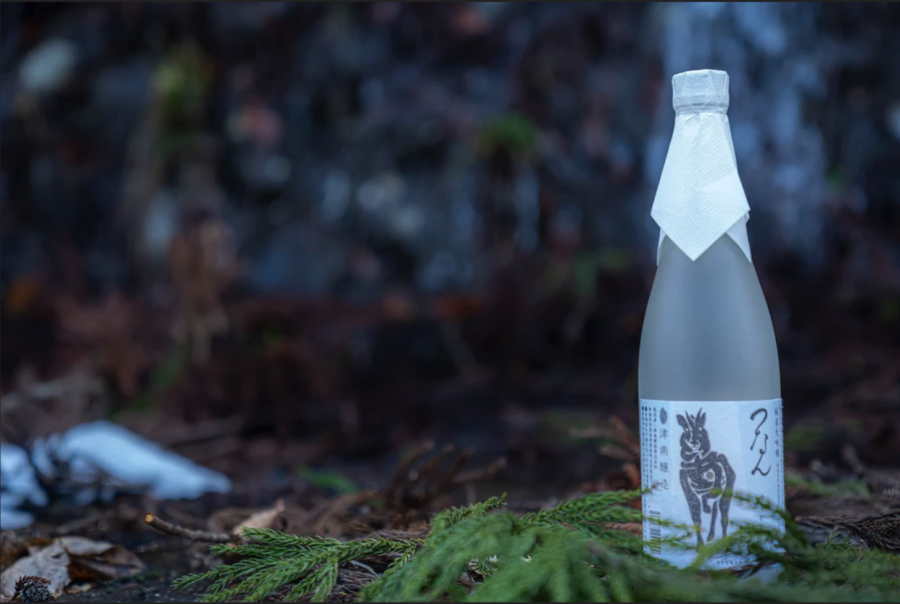
Since 2023, we have been experimenting with various brewing methods using Uonuma-grown Koshihikari rice. These include rice polished to 50 per cent, unpolished brown rice, and rice polished to 90 per cent—which is almost the same as the white rice we eat every day. We have confirmed that all of these yield sake of a quality suitable for commercial release.
We refer to this 90 per cent brewing method as ‘table rice brewing’. This means turning rice grown for consumption into sake whilst it remains in almost the same polished state as when it reaches the dinner table.
Suggestions
It is not simply a matter of wanting to popularise the term ‘Iimai Brewing’ as a new category of sake.
At a time when the rice export market is in flux, this proposal explores whether another option might be created between local agriculture and sake breweries.
I am not suggesting that we should simply turn all surplus rice into sake. Compared to the volume of rice produced for consumption, the amount available to the sake industry is limited. It is not the solution to the problem of rice surpluses.
Even so, I do think it’s better to have as many options as possible.
Some years there is a shortfall, whilst in others there is a surplus. Market prices rise and fall. Rather than leaving farmers to bear the brunt of these fluctuations each time, we should ensure that the produce of the rice fields has multiple outlets. Might the sake breweries that still remain in various regions be one such outlet?
About this series
However, before we can say that, there are a few things we need to check, one by one.
To begin with, why did sake stop being made from rice intended for consumption? Can sake really be made from rice intended for consumption? And if so, why has it not become more widespread until now? Furthermore, if it were to be promoted, who would take on what role?
We will be publishing this in six instalments.
· #2 When did people start making sake from sake rice?
· #3 Making sake from Koshihikari rice.
· #4 Why sake made from table rice hasn’t caught on.
· #5 Farmers brew sake using their own rice.
· #6 Redefining the relationship between rice and sake.
In Part 2, we’ll begin by looking at when and why sake rice first came into being.