
In #2, I wrote that the system of ‘sake rice’ was developed over a period of about 100 years.
So, can sake be made from the rice we eat? What follows is an account of our actual experiment.
I didn’t set it at 90 per cent from the outset
For the first batch, we polished the Koshihikari rice to 50 per cent.
The reason I didn’t start with 90 per cent polished rice—the same as the rice we usually eat—was that I first wanted to check whether rice suitable for everyday consumption could actually be used to make sake. If I had changed the polishing ratio at the same time, I wouldn’t have been able to identify the cause if it hadn’t worked out.
We therefore decided to focus on a single factor that differed from our usual brewing process. The change we made was to switch from sake rice to Koshihikari rice grown in Uonuma. Polished to 50 per cent in accordance with the standards for Junmai Daiginjo, the design is intended to highlight the difference in the rice alone.
The rice used was Koshihikari from Tsunan, sourced by Tsunan Brewery from the local farmers who had previously supplied them with sake rice. Both the rice fields and the farmers remained the same; the brewery approached the same suppliers they had relied on for Gohyakumangoku until the previous year and asked them to provide Koshihikari for their sake this year.Rather than sourcing sake rice from afar, rice that had been grown for consumption found its way straight into the brewery.
What I learnt during the preparation
As the brewing process began, it became clear that Koshihikari could not be treated in the same way as sake rice.
Because of the stickiness—which is an advantage in cooked rice—the steamed grains tend to stick together, making the process of inoculating them with koji mould labour-intensive. It also lacks the distinct shinpaku (white centre) typically found in sake rice, and the steamed rice hardens quickly. The very qualities that make it delicious when eaten thus become a source of difficulty when producing koji.
To address this, the soaking, steaming and koji-making processes are adjusted to suit Koshihikari, and a suitable starter culture is selected before brewing begins. The approach involves assessing the characteristics of both the rice and the koji mould to determine a compatible combination in advance.
There were no instances of fermentation coming to a halt or the batch having to be discarded. In other words, whilst there were certainly challenges, it was not a matter of the rice being unsuitable for brewing simply because it was a variety intended for consumption.
At 50 per cent, it became a junmai daiginjo.
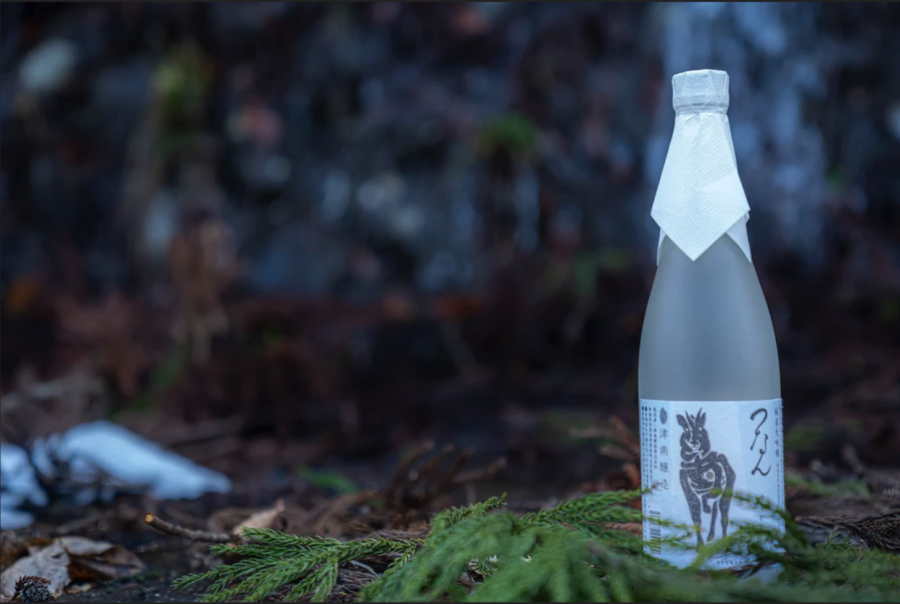
The result is a junmai daiginjo made from Uonuma-grown Koshihikari rice polished to 50 per cent. The product is called ‘ HIROSHIN’.
We have also received external recognition. Sake brewed from the same Uonuma-grown Koshihikari rice won a Gold Award in the Junmai Daiginjo category at the Kura Master in France in 2024, and a Platinum Award at the Milan Sake Challenge in Italy in 2025.The judges were local sommeliers, and these results reflect their evaluation of the sake purely as a bottle of Japanese sake, without any preconceptions about it being made from rice intended for consumption.
What we learnt here was that Koshihikari is not a variety of rice that cannot be used to make sake, but rather a variety with different characteristics to sake rice. Once we understand the difference, we can adapt our brewing methods accordingly.
Next, I tried making it using brown rice as it is.
I now understand that sake can be made from rice polished to 50 per cent. However, if 100 kilograms of brown rice is polished down to 50 per cent, only 50 kilograms is actually used for sake brewing. The rest becomes rice bran or rice flour. I was left wondering whether it is really necessary to polish it down that much if the rice is intended for consumption.
So next, I shook it over to the other side and prepared it as brown rice, without removing a single grain.
The circumstances here were different from those of the 50 per cent batch. One of the challenges was the koji. As brown rice retains a layer of bran, the mycelium of the koji mould finds it difficult to penetrate using conventional brewing methods. If one attempts to brew it without polishing the rice, one is forced to confront head-on the very problem that has hitherto been resolved through rice polishing.
The method employed was not to break through the bran to search for microorganisms inside, but rather to select those growing on the surface of the bran.The microorganisms used were collected from a chest of tools belonging to a koji maker, dating back some 100 years, which had been preserved in Nagaoka and Settaya. Following genetic analysis, we conducted koji production trials and confirmed that these microorganisms grew on the surface of brown rice bran and possessed saccharification capabilities.
Another issue is sprouting. Whilst the germ is removed from white rice during the milling process, it remains in brown rice, which means that when soaked in water, the grains may attempt to sprout. By experimenting with soaking times, steaming methods and koji production techniques, I sought a way to brew the sake without the grains sprouting.
Whilst 50 per cent of the preparation went relatively according to plan, the brown rice took a while.
Even so, it turned into sake even when left as brown rice. At 50 per cent, I changed the variety; with brown rice, I took it to the extreme of omitting the polishing process altogether. Having tested both extremes, there remains one more figure I wish to verify: 90 per cent, which is close to the white rice I usually put in my rice cooker at home.
What is known as ‘rice-based brewing’
Not all sake made from rice intended for human consumption is referred to as ‘rice-based sake’.
The first one, ‘ HIROSHIN’, is also made from Uonuma-grown Koshihikari, but it has been polished down to 50 per cent. What we call ‘Iimai Jōzō’ refers to sake brewed from rice that is in almost the same condition as when eaten—rice polished to around 90 per cent. As it is brewed from rice used for cooking, it is called ‘Iimai Jōzō’. The name is quite straightforward.
Prepare at 90 per cent
In 90 per cent of our batches, two conditions that we had previously tested separately are combined: using table rice rather than sake rice, and brewing without extensive polishing.
In the early stages, we adjusted the treatment of the rice intended for consumption; in the latter stages of fermentation, as the rice remained largely intact, we began the brewing process at a lower temperature than usual, whilst monitoring the temperature of the moromi, which tends to rise easily. Rather than claiming to have invented a special technique, I believe it is more accurate to say that we simply adapted the temperature, koji and process to suit the rice being used.
The rice was milled using the farmers’ machinery.
What stands out most about this brewing process is not the sake brewery, but the coin-operated rice polisher.
As the rice we received that year was brown rice, we had to polish it down to about 90 per cent. We did not use the sake brewery’s dedicated rice polisher, but rather the type of polisher used by farmers and households to make white rice.
I believe this is a key practical point in the brewing of rice for sake. If the rice is 90 per cent polished, it can be milled using the rice polishers that farmers normally use. There is no need to start from scratch by producing specialised raw materials and running them through dedicated sake-brewing polishing equipment; instead, the rice that is already available can simply be polished white and taken to the brewery.
This brings sake brewing and agriculture that much closer together.
What I learnt
So, we tasted sake made from Uonuma Koshihikari rice polished down to 50 per cent, sake made from unpolished brown rice, and sake made from rice polished to 90 per cent—which is similar to the white rice we eat every day. In autumn 2026, GO UONUMA SPARKLING, based on this 90 per cent polishing concept, will be launched.
To summarise, it looks like this.
Sake can be brewed using rice intended for consumption. However, it will not turn out well if brewed in the same way as sake rice. It is necessary to adjust the koji, soaking, steaming and temperature to suit the properties of the rice. If this can be achieved, the resulting sake will be of a quality suitable for sale.
We have established that it can be produced and marketed. Even so, sake made from table rice has hardly gained any traction.
In #4, we’ll be looking not at the techniques of sake brewing, but at the reasons behind them.
Excerpt from the book *Rice Brewing*
CEO of FARM8 ATSUSHI KABASAWA