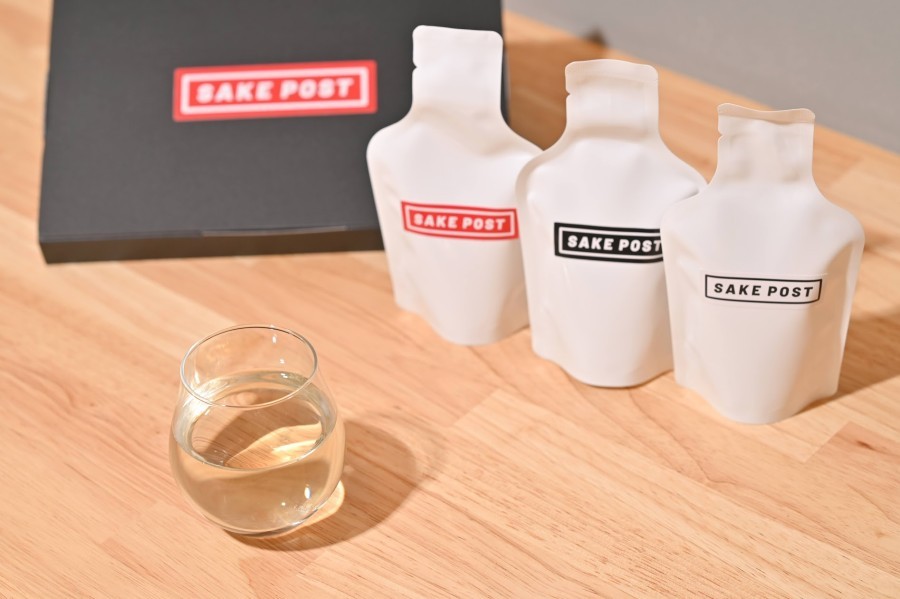

In #3, I wrote about how sake can be brewed using rice intended for consumption. We used rice polished to 50 per cent, brown rice, and rice polished to 90 per cent. In each case, the resulting sake was of a quality suitable for sale.
So why is there hardly any rice wine made from edible rice on the market?
If it is not a technical issue, the reason must lie elsewhere. Upon investigation, I found no definitive prohibitions. Instead, what became apparent were a number of minor obstacles.
There are no specific requirements regarding variety in the labelling standards.
First, I checked the rules.
The requirements for labelling terms such as ‘Junmai Daiginjo’ are set out in the National Tax Agency’s ‘Standards for the Labelling of the Manufacturing Methods and Quality of Sake’. These specify conditions regarding raw materials and the rice polishing ratio. However, there are no specifications regarding the variety of rice. Nowhere does it state that the rice must be a variety specifically suited to sake brewing.
Even Koshihikari rice can be labelled as ‘Junmai Daiginjo’ provided it meets the necessary requirements.
On the contrary, whilst junmai sake was once subject to a requirement stipulating that ‘the rice polishing ratio must be 70 per cent or less’, this was abolished in 2004. This means that, technically speaking, junmai sake made from rice that has been barely polished at all has been possible to produce for over 20 years.
The scheme had not been discontinued.
The channels through which raw materials are sourced are fundamentally different
Next, the flow of rice.
Sake rice is delivered to the brewery via established channels, such as agricultural cooperatives and wholesalers. The system is primarily based on contract farming, with the quantity for the following year agreed in advance. The brewery receives the required amount at the required time.
The rice we eat follows a completely different supply chain. It is collected, graded, distributed via wholesalers, and then supplied to retailers and the catering sector.
These two do not usually interact.
When a sake brewery decides to use rice intended for human consumption, the first question that arises is: ‘Where should we buy it from?’ Should we order directly from local farmers, or go through a rice merchant? How much should we buy? And how should we set the price?
Whilst there are established procedures for sake rice, there are none for table rice.
There is no reason to change in the storehouse during peacetime.
From the storehouse’s perspective, it’s much simpler.
Sake breweries are expected to produce the same quality of sake every year. It would be a problem if a sake that tasted good last year tasted different this year.
To this end, it is essential to have a thorough understanding of the properties of the raw materials. We have many years’ worth of data on sake rice, covering its rate of water absorption, its condition after steaming, and how it dissolves within the moromi. Both the equipment and the production process are adjusted to suit this rice.
If you change the raw materials, everything has to be adjusted accordingly: the soaking time, the steaming method, the koji-making process, and the fermentation temperature. As I mentioned in #3, Koshihikari rice is sticky, making it difficult for the koji mould to colonise, and the steamed rice hardens quickly. The same process simply won’t work.
To test it, you’ll need to use one tank’s worth of raw materials and time. If it doesn’t work out, that amount will be a loss.
And if existing products are selling well, there is little reason to go out of one’s way to change them.
It is not that anyone is being lazy. As a business expected to deliver the same standard of quality year in, year out, this is a sensible decision.
Even if I can make it, I don’t have the words to explain it
Even if we could produce it, the next step would be to sell it.
In the sake section, the rice polishing ratio serves as an indicator of value. The lower the figure—such as 50 per cent or 40 per cent—the more the rice has been polished. As this requires both raw materials and labour, it is easy to explain why the price is higher.
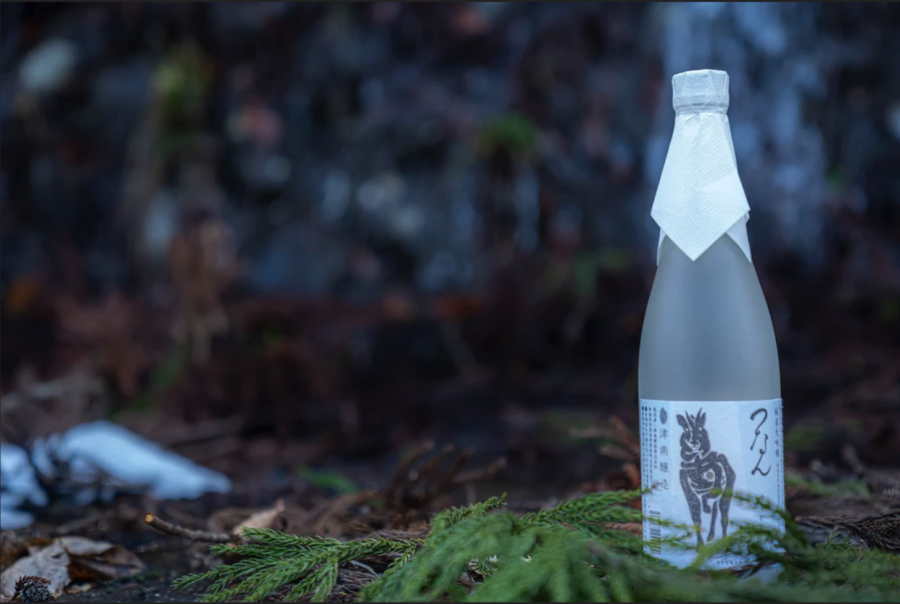
On the label for Iimai Brewing, we write ‘90’.
By existing standards, this figure is a disadvantage. It appears to be ‘sake that hasn’t been diluted very much’.
Of course, there is a reason why we do not polish the rice. We use the whole grain. It can even be polished using a farmer’s rice polisher. We make sake from rice that is in exactly the same condition as the rice served at the dinner table. However, it takes a bit of explaining to get that across.
If you mention Yamada Nishiki, people will understand that it is ‘the king of sake rice’. If you mention Gohyakumangoku, they’ll know it’s ‘a light and crisp sake from Niigata’. There are certain phrases that have become established over time.
Sake made from rice intended for human consumption does not contain it.
On the other hand, there are some terms that are specific to rice intended for human consumption
However, there are some words that can be used here as well.
Koshihikari, Akita Komachi, Hitomebore. These are the names of rice varieties that even people who aren’t familiar with sake will recognise. Names of producing regions, such as ‘from Uonuma’, are also widely recognised.
Whilst only a few people know the names of sake rice varieties, there are very few who do not know the name of the rice they eat.
The problem is that this term is not yet in use in the sake section. As there is no precedent, even the sales staff are unsure how to explain it.
There is no mechanism yet for building on a small scale
There is also the issue of scale.
When a farmer asks, ‘Could we make sake from our rice?’, the quantity involved is not large. It’s just a small part of their rice field.
From the brewery’s perspective, producing small batches is labour-intensive. Given the constraints of our tank capacity, we also need to decide how to fit this into our annual production plan.
And then there are the aftermath of production to consider. Who will provide the bottles and labels? Who will decide on the product name? Whose stock will the sake become? Who will sell it?
Farmers do not grow rice with that in mind. Nor can sake breweries simply stop once the sake has been brewed.
I think this is the part that’s most likely to get stuck.
Where has it come to a halt?
To summarise, it looks like this.
We haven’t abandoned the system. The technology can be overcome. However, as we source our raw materials through a different channel, there is little reason for the brewery to make the switch; even if we were to produce it, we would lack the words to explain it, and there is no procedure in place for producing it on a small scale and turning it into a product.
Taken one by one, these are hurdles that can be overcome.
There is no need to change the system. Nor is there any need for new technology. Decide how to source the rice, redefine the processing conditions, draft a product description, and identify the customers. That is all.
However, there is no mechanism in place to address this comprehensively.
The reason why sake made from table rice failed to gain traction was not due to problems with brewing technology, but rather to a lack of coordination between procurement, brewing, product design, evaluation and sales.
So, how do we establish that connection?
In #5, I’ll be writing about the farmer who actually came to me with this enquiry.
Excerpt from the book *Rice Brewing*
CEO of FARM8 ATSUSHI KABASAWA