
Land is not a gift from our ancestors, but something entrusted to us by our children.
When I first came across this way of thinking, I felt as though a name had finally been given to the sense of unease I had been feeling for many years.
I want to preserve the value of the local community.
But if it isn’t economically viable, it won’t last.
For a long time, I have been thinking about the hard-to-explain discrepancy that lies between them.
What is important to a local community does not necessarily coincide with what the market values highly.
Whether the rice paddies are being protected.
Whether farmers will be able to carry on.
Whether the community is being maintained.
Such value is not reflected in the price.
Since social value cannot be quantified, it cannot be measured using current yardsticks.
Preserving the region’s prosperity and the demands of economic rationality sometimes pull in opposite directions.
I could sense that disconnect, but I didn’t know how to put it into words.
I felt that the phrase ‘items held in trust’ seemed to pinpoint exactly what it was.
There is a saying in the world that goes like this:
We do not inherit the Earth from our ancestors;
We borrow it from our children.
(We have not inherited the Earth from our ancestors; we are borrowing it from our children.)
For a long time, I have understood this phrase in a local context.
Let’s try replacing ‘Earth’ with ‘Land’.
When you do that, the meaning becomes much more accessible.
We do not inherit the LAND from our ancestors;
We borrow it from our children.
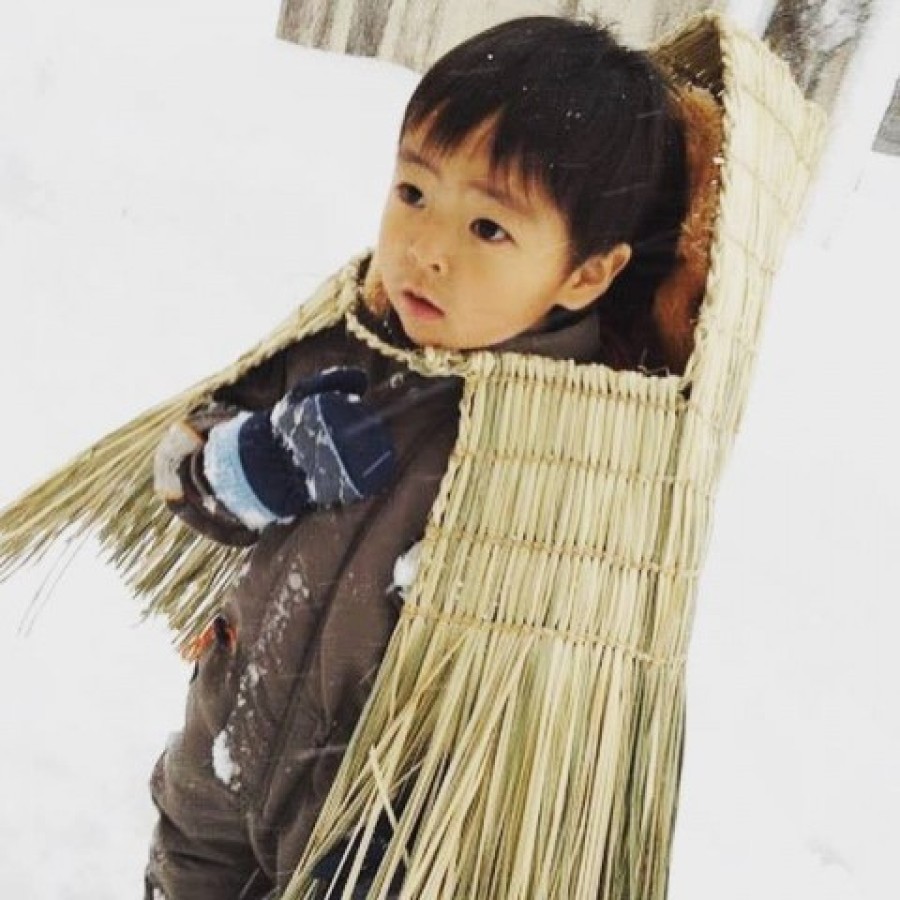
Land is not something we have inherited from our ancestors, but something entrusted to us by our children.
I have revisited these words time and again in the course of our activities.
The word ‘be granted’ carries a sense of ‘having been given’. It conveys the feeling that what has been passed down from one’s ancestors belongs to oneself. If it is one’s own, one is free to use it as one sees fit. Even if one were to use it up efficiently, that is a decision for the owner to make.
On the other hand, the word ‘entrusted’ carries a completely different meaning. What has been entrusted to us is not our own. We must return it one day. If we cause it any harm, it will not remain merely our own problem. To whom must we return it? To the children.
Even when faced with the same piece of land, whether you regard it as something you have ‘been given’ or something you are ‘holding in trust’ makes a huge difference to how you relate to that land. It changes the way you structure your business. It changes the way you engage with the local community. It even changes your day-to-day consumption choices.
Which of these perspectives has shaped the design of today’s society?
For a few years up until recently, I had the opportunity to be involved in the running of a local agricultural college, and, as fate would have it, I was even given the chance to stand at the front of the class on a few occasions.
At that school, many of the lessons took place through hands-on farming work. The pupils tilled the soil, sowed seeds and harvested crops. There were also lessons where they not only grew vegetables but also reared pigs and chickens, experiencing the entire process right up to the point of shipping them as food. It was an experience that allowed them to understand the meaning of the phrase ‘receiving life’ not just with their minds, but with their bodies.
When someone who has had this experience stands in front of the meat counter, what they see is bound to be different from before. Beyond the meat wrapped in its packaging, they can see the time it took to raise the animal, the people involved, and the process that led to that point. Their approach to choosing meat based solely on price is sure to change.
Not all of our graduates go on to become farmers. But I think that’s fine. I feel that the essence of this course was not so much to train the next generation of farmers, but rather to educate consumers.
I believe we are entering an era in which how we consume is becoming more important than how we produce. Whether or not each individual consumer can make choices with a sense of responsibility—as if they were merely ‘stewards’ of these resources—will determine whether our local communities can survive. I even found myself thinking that, if at all possible, this kind of experiential learning should be incorporated into all forms of education.
If we interpret the term ‘land’ as referring solely to agricultural land or residential land, our understanding becomes somewhat narrow.
The term ‘land’ as used in this book carries a broader meaning. It refers to the power to create something from nothing—a power that has been accumulated in that place over thousands of years.The cycle of life nurtured by water. The abundant water sources created by snow. The bonds within communities forged by rice cultivation. The wisdom of coexistence with microorganisms, honed by a culture of fermentation. All of these are the power that springs forth from the land itself.
Once this resource is depleted, it will take decades to restore. If the current generation were to use up everything that has been nurtured over thousands of years since the Jōmon period, there would be nothing left to pass on to the next generation.
There are precious things in the community where I now live that I wish to pass on to the next generation. I am convinced of this because the springs in this land have not yet run dry. This is the result of generations of people having safeguarded them as something entrusted to their care.
In Part One, we will take a closer look at the ‘gifts’ that this land has nurtured over the course of time. How the bounty of water has shaped our culture; how snow—an environment that at first glance appears harsh—has in fact given rise to abundant springs; how the choice to cultivate rice has fostered the strength of our community; and how the wisdom of fermentation has created a culture of coexistence with microorganisms.
None of this is a coincidence. It was a strategy devised by many people to ensure their long-term survival on a limited amount of land. We stand today on the foundations laid by those who came before us.
To rediscover the sense that these things are merely on loan.
I believe that is the first step towards bridging this gap.
ATUSHI KABASAWA
FARM8 Co. Ltd.,
Next chapter: ‘Regions That Become Constellations’ – Chapter 2: The Benefits of Water