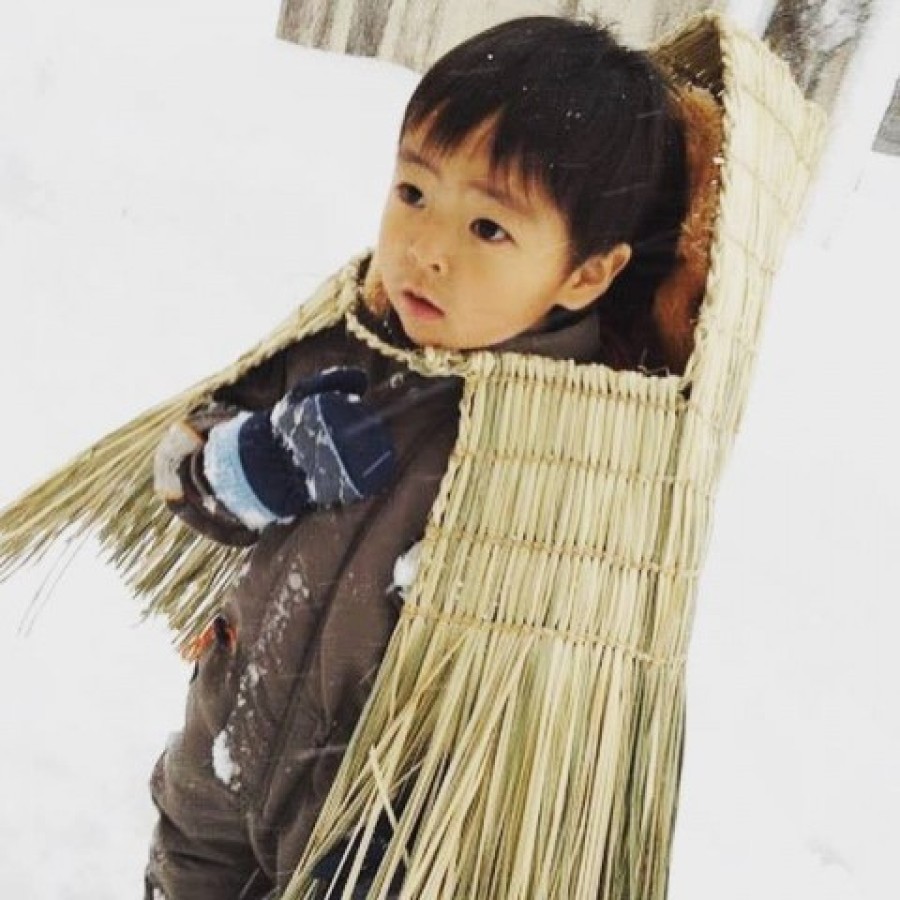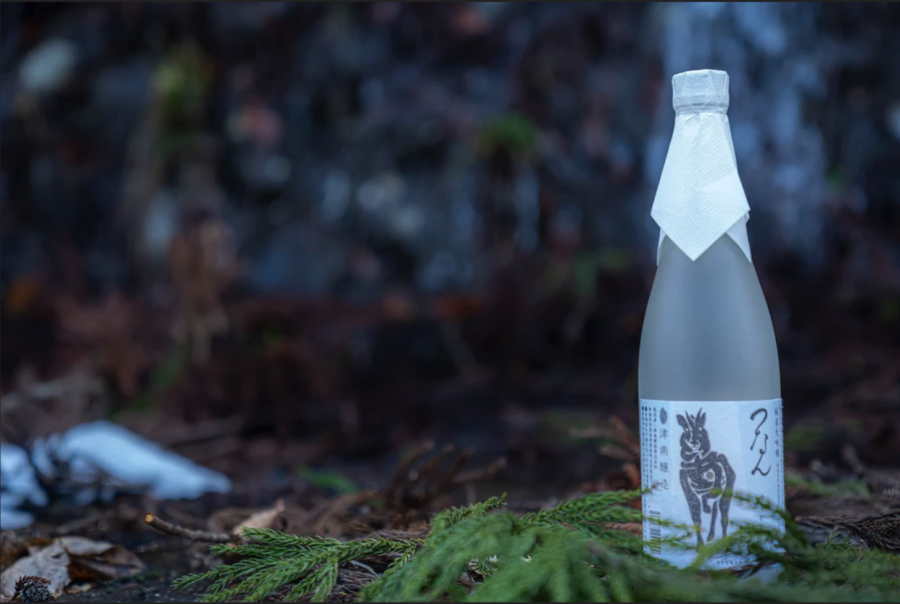

There are some small but charming sake breweries in the area.
There are some farms that are supported by a small but devoted group of fans.
There are some hamlets which, although small, play an important role.
However, out in the field, I often hear people say things like this.
‘It’s no use—our place is too small.’
‘We’re no match for the big players’
‘If only we were a bit bigger, we could do it.’
Is that really the case?
You don’t need to do the same as large companies.
Large companies have their own way of doing things, and small organisations have theirs.
To put it bluntly, a small sake brewery may not need 10,000 customers.
There are some breweries that can keep going as long as they have a hundred dedicated fans.
There are a hundred people who keep buying from us every month.
Those people learn about the brewery, support it, and enjoy the sake.
There are worlds that exist solely on that basis.
The problem was that there was no system in place for meeting those hundred people.
I used to work in a role supporting branding, marketing strategy and product planning.
Among the organisations receiving support were sake breweries.
Until now, the distribution of sake has been centred on major department stores, supermarkets and local liquor shops.
Unless it’s stocked on those shelves, there’s hardly any chance of people from outside the local area trying it.
The same applies to the drinker.
For that person, the only ‘sake’ was the sake they had to hand.
Sake I hadn’t yet encountered didn’t even cross my mind as an option.
But perhaps, in truth, I simply haven’t met them yet.
A flavour that suits you perfectly.
Sake that reflects the brewer’s philosophy.
A drink whose label design catches the eye.
The film you’ll love most in your life might be waiting for you in a place you’ve never been to.
Until then, there had been few opportunities to encounter such ‘first-time sakes’ when it came to Japanese sake.
Subsequently, for four years from 2019, I had the opportunity to take a hands-on role in the day-to-day management of the brewery as Representative Director of Tsunan Brewing. I continue to be involved in the management of the company in my current role as Chairman.
Things that I hadn’t been able to see whilst providing support from the outside became clear once I stepped inside the storehouse.
The brewers honed their skills day by day to improve quality, and approached the art of sake-making with the aim of achieving high marks at the competitions.
It is not merely a matter of ranking; it is a pride in the craftsmanship cultivated over a long period of time, and a vital set of values that has underpinned the culture of sake.
On the other hand, there were very few opportunities for the brewery to hear directly from drinkers about the occasions on which they enjoyed their sake and what it was that appealed to them.
Who is drinking our sake, where, and how do they feel about it?
Which sake is popular, and how is it usually enjoyed?
There were virtually no mechanisms in place to find that out.
The problem was not that the information did not exist.
The flow of information was not connected.
And there was another challenge.
What I really wanted to feature was a small sake brewery.
However, it is more difficult for smaller sake breweries to set aside a budget for marketing their products to the outside world.
The very people we most want to help are the ones who find it hardest to access that help.
That was the structure.
In that case, rather than receiving payment from the sake breweries, we should simply purchase the sake ourselves and act as the ones who deliver it to the drinkers.
That’s what I’ve come to realise.
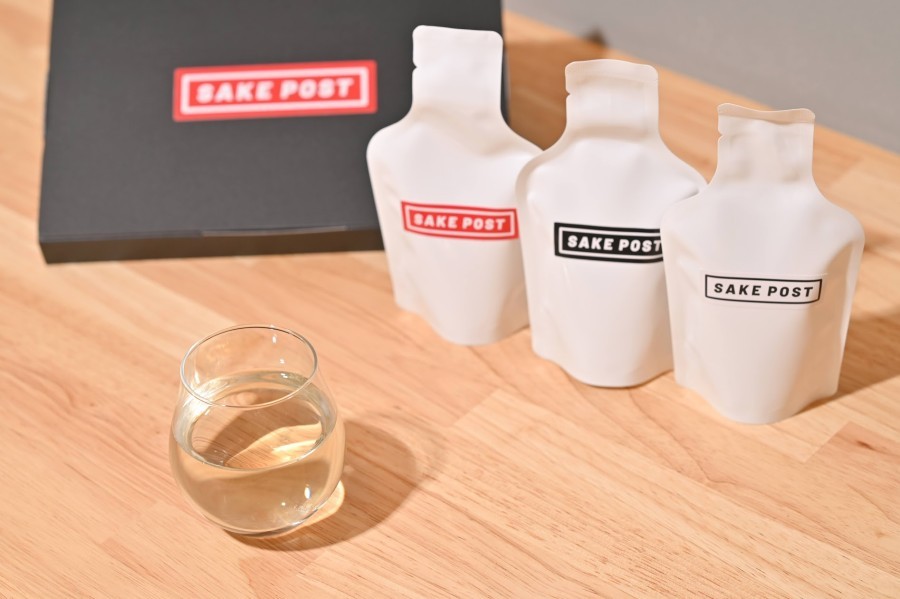
We purchase sake from breweries, repackage it into small pouches, and deliver it directly to individual customers across the country.
This is SAKEPOST.
It is a scheme that delivers small quantities of sake from breweries across the country directly to your letterbox.
Every month, sake from various breweries across the country arrives in my postbox.
Sake that doesn’t appear on restaurant menus.
Sake that can only be found in local off-licences.
A drink whose name I don’t even know yet.
It serves as a gateway to discovering sake from such small breweries.
Visitors do more than just enjoy sake.
We’ll write our thoughts, share our preferences and the time we had a drink.
We are passing on those voices to the sake brewery.
It’s not just a survey.
Who is drinking, in what circumstances, and how do they feel whilst doing so?
This is the genuine feeling of drinkers who previously found it difficult to get to the brewery.
At a certain brewery, a printed document summarising customer feedback was placed on the table for the first time during a meeting to draw up plans for the next brewing season.
What sort of people are drinking which drinks, and in what frame of mind?
These are the views of people who have actually tasted the wine, not those of the competition judges.
There are limits to the method of delivering aid door-to-door by hand if we are to continue providing support.
That is why we created the delivery system itself.
The flow of information has changed.
This has created a direct link between drinkers and the breweries.
Even without someone constantly acting as an intermediary, the system ensures that voices are heard.
So, we can connect not just one warehouse, but a hundred or even two hundred.
There are many structures like this in the area.
Small-scale farmers cannot compete with large-scale distribution networks.
Small guesthouses cannot afford to advertise.
Small-scale craftspeople are unable to expand their business nationwide.
But that’s not down to a difference in ability.
It’s a difference in the way the system works.
If we redesign the system to suit smaller organisations, the notion that ‘we can’t do it because we’re small’ will be transformed into ‘we can do it precisely because we’re small’.
It is precisely because we are a small organisation that we are able to continue creating our products whilst listening to each and every individual’s views.
It is precisely because we are a small organisation that we are able to nurture relationships with those who support us.
Being small is not a sign of weakness.
As long as the right systems are in place, there are things we can do precisely because we’re small.
What does it mean for a small light to keep burning?
To create an environment in which a single brewery, a single farmer and a single village can continue to survive, however modestly.
Not relying on the support of some greater power, but each person being able to carry on independently.
Such an environment cannot be created through good intentions alone.
We need a system.
The aim is not to make a small light bigger.
That a small light, even whilst remaining small, continues to shine without going out.
And may those individual lights continue to shine in every corner of the community.
I would like to create a system for that purpose.
ATSUSHI KABASAWA
FARM8 Co. Ltd.,
Next chapter: ‘Regions That Become Constellations’ – Chapter 15: The ‘Add a Chair’ Game