
When I’m working in the local area, I often come across some rather strange sights.
Businesses in the same area are competing with one another.
There are 89 sake breweries in Niigata Prefecture. Every one of them produces excellent sake. However, shelf space in specialist sake shops is limited. The sake sections in supermarkets and the menus at restaurants are also limited.
That’s why the 89 breweries are all vying for the same shelf space.
If one brewery is included, another is excluded. If one brand sells well, another fails to sell.
The scramble for chairs continues, yet the number of chairs remains the same.
As I watched that scene, I’d always wondered: is there really no other option but to go along with it?
The same thing is happening in both tourism and migration.
Accommodation providers in tourist destinations are competing for the same travellers. They lower their prices, offer incentives and vie for higher rankings on booking sites. Yet the total number of travellers remains unchanged. Travellers simply move from one accommodation to another; this does not mean that the number of people visiting the area is increasing.
But if you look at it from a different angle, a whole new perspective emerges. Rather than having accommodation providers compete with one another, the entire region is designed as a single itinerary. We create experiences that cannot be fully enjoyed in just one night. We establish numerous places for travellers to visit. As a result, travellers will want to stay for another night.Rather than accommodation providers competing for travellers, the number of travellers staying in the region as a whole will increase. It’s a mindset of adding more chairs rather than fighting over the ones that are there.
Local authorities are also competing with one another over the amount of subsidies they offer to new residents. However, even if competition for these subsidies intensifies, it does not mean that the total number of people wishing to move to rural areas will increase.
The same applies here. Rather than using subsidies to attract people, we should focus on improving the quality of life and satisfaction levels across the entire area. Shopping should become more convenient. Raising children should become easier. The community should flourish. As a result, the number of people choosing to move to the area will increase. Instead of competing for a limited number of subsidy ‘seats’, we should aim to increase the number of people who actually want to live here.
The number of chairs hasn’t changed. I believe that is precisely where the potential lies.
So, what does it mean to add more chairs?
For a long time, sake has been enjoyed in izakayas and at home. However, it wasn’t drunk at campsites. Nor was it drunk at the summits of mountains or on outdoor stages at festivals.
The reason is simple: bottles and tins were difficult to carry around.
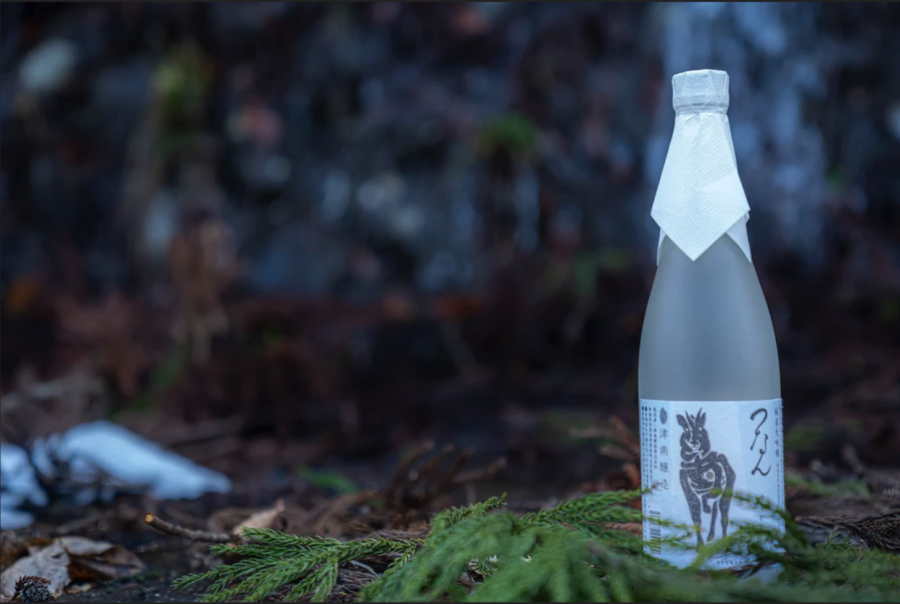
We’ve created a sake packaged in a pouch designed specifically for outdoor use. It’s lightweight and unbreakable. It’s a sake you can pop in your rucksack and take with you on a camping trip.
And so, a new chair came into being at the campsite—a place where sake had never been found before. Another chair was placed outside the area where the 89 breweries had been competing.
This isn’t about fighting over chairs. It’s about making new ones.
Products combining fruit and sake were also born from the same concept. They were designed to appeal to people who had not previously drunk sake. This created a new demand for people to buy fruit and sake together. It also generated demand for gifts amongst young women. We were not trying to take market share from existing players. Rather, we created a new niche amongst people who did not drink sake.
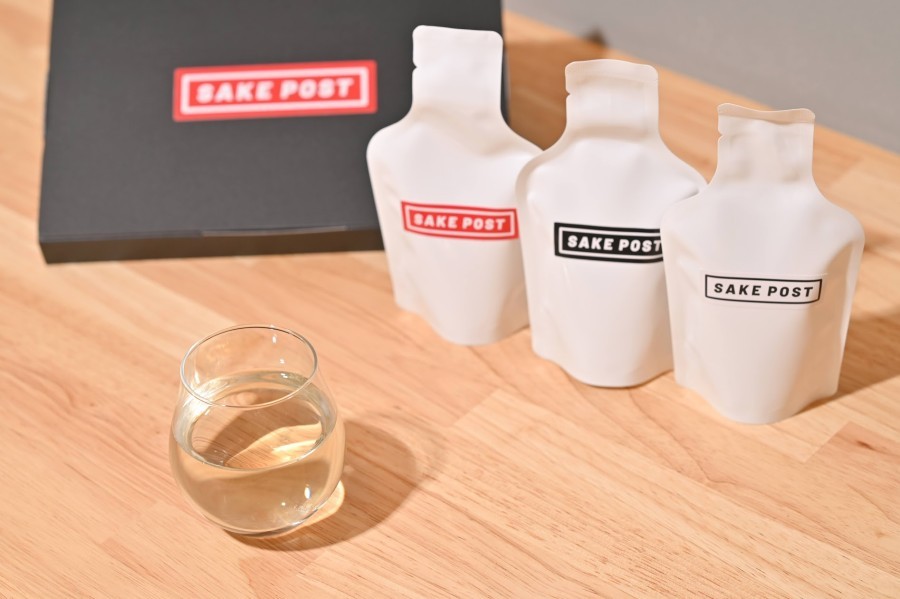
SAKEPOST is no different. We have created a new ‘platform’ for sake, where you can discover new varieties in small quantities from the comfort of your own home. Every month, you receive local sake that you won’t find on restaurant menus or on the shelves of local sake shops. You might fall in love with a sake from a brewery you’ve never encountered before and become a fan. A new platform has emerged beyond the confines of traditional retail outlets.
What these three have in common is that they are not trying to take over existing positions. They have created new positions where there were none before.
I think the reason people end up fighting over chairs is that their field of vision becomes narrower.
If you focus solely on your own company’s turnover, it seems as though competing within a limited market is your only option. If the neighbouring sake brewery sells well, your own sales will suffer. If travellers stay at the neighbouring inn, your own inn will have empty rooms. That is how it appears.
However, if we broaden our perspective to encompass the industry as a whole, a different picture emerges. If the industry as a whole is shrinking, competing for the same share of the market will only leave everyone worse off. If we can expand the industry as a whole, everyone—including those who were once competitors—can prosper.
If we broaden our perspective to encompass society as a whole, a different picture emerges.
Places where sake was not available. A demand that no one has yet recognised. People and cultures that had not previously been connected.
There are still some places available there.
There isn’t a fixed number of chairs from the outset. It is those who broaden their perspective who discover new chairs. Or perhaps they make them themselves.
Even now, when I’m working in the local area, I still find myself thinking about it.
Is what I’m about to take part in a scramble for chairs? Or is it a place where we can add more chairs?
Rather than pushing someone aside to sit down, I’d rather fetch another chair. That’s the sort of work I’d like to do.
After all, there are still plenty of chairs in the neighbourhood that haven’t been put out yet.
ATSUSHI KABASAWA
FARM8 Co. Ltd.,
Next chapter: ‘Regions That Become Constellations’ – Chapter 16 : Are Leftovers Really Just Leftovers?