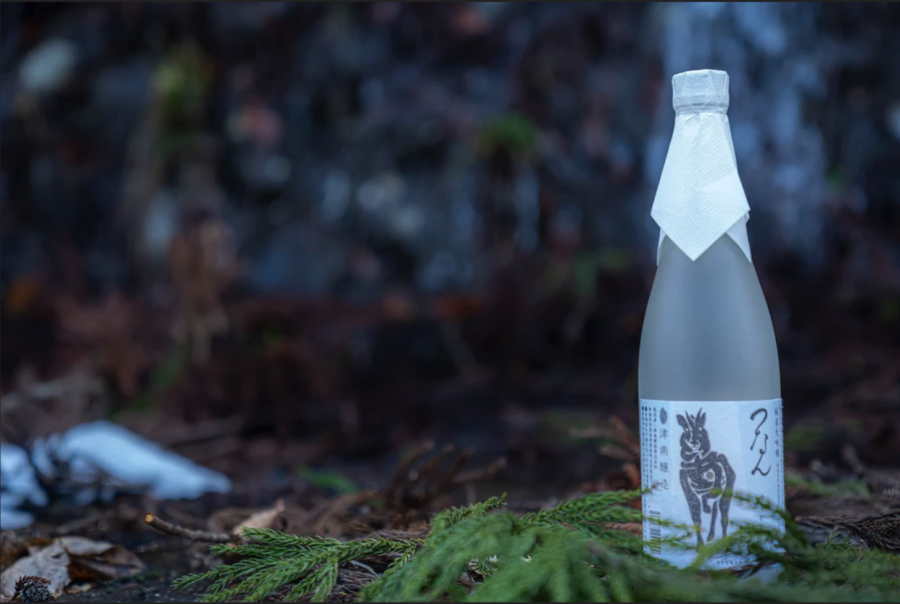

There is a distinctive atmosphere inside a sake brewery.
The cool temperature, the sweet aroma of rice and koji, and the subtle signs of fermentation. Inside the large tanks, hundreds of millions of microorganisms are at work. They are invisible to the eye. They make no sound. Yet something is certainly happening.
Over time, the prepared rice and water are transformed into sake. It is not just the toji’s skill that brings about this transformation; it is the power of microorganisms. All humans can do is create an environment in which that power can be fully utilised.
Fermentation is a collaborative process with invisible life.
What is fermentation?
This refers to the process whereby microorganisms interact with food ingredients to create new value. Rice becomes sake; soya beans become miso or soy sauce; and vegetables become pickles. This results in flavours, nutritional value and shelf life that were not present in the original ingredients.
In the sense that it brings to light the potential that lies dormant within ingredients, fermentation is one of the purest forms of nature’s power. Rather than humans adding anything from the outside, it is the power of microorganisms that draws out the potential lying dormant within the ingredients. Just as a spring wells up of its own accord, the ingredients undergo a transformation of their own accord.
Given their limited land, the Japanese have made particular strides in the art of fermentation.
There are vast grasslands across the world. In many regions, livestock farming has developed as a source of protein. Although cattle and pigs have also been reared in Japan, the country’s mountainous and limited land area made it difficult to carry out large-scale livestock farming, which requires extensive grazing land. It was against this backdrop that the Japanese refined the technique of fermentation.
When soya beans are fermented, they become miso or soy sauce. Both are rich in protein and highly nutritious. Moreover, fermentation significantly improves their shelf life.In an era without refrigerators, being able to preserve food for long periods was a lifeline for surviving the winters in snowy regions. Fermenting rice produces sake, whilst fermenting vegetables produces pickles. Fermentation enhances the nutritional value of ingredients, enables preservation and enriches their flavour. It was a form of wisdom designed to make the most of limited resources.
A wide variety of fermented foods are still found in Japan.
Miso, soy sauce, sake, mirin, vinegar, pickles, natto, bonito flakes, and amazake. Japanese food culture is deeply intertwined with fermented foods. Moreover, each of these has developed in its own unique way, adapted to the local climate and microbial environment.
Although Shinshu miso and Sendai miso are both made from the same soya beans and salt, they have completely different flavours. Just as sake from Niigata and sake from Nada have distinct characteristics, the microorganisms native to each region have given these fermented foods their unique qualities. It is the land that gives food its character.
The brewing of sake occupies a unique place within the world’s alcoholic beverage culture.
Although both are made from rice, Korean makgeolli has evolved using a method that involves rapid fermentation in the high temperatures of summer. Sake, on the other hand, is fermented slowly over a long period in the low temperatures of winter.Steamed rice, koji and brewing water are added in several stages, and the brew is slowly fermented over a period of nearly a month. It is not a question of which is superior; rather, they represent distinct fermentation cultures that have developed within their respective climates and cultures.
We carefully monitor the activity of the microorganisms whilst patiently waiting for fermentation to take its course. It seems to me that the spirit of ‘looking ahead and taking one’s time’—a mindset cultivated through rice farming—is embodied in the brewing of sake.
The relationship between fermentation and health has been the focus of attention in recent research.
As the link between gut health and overall well-being becomes increasingly clear, the importance of fermented foods is being re-evaluated. Miso soup, pickles and natto: these are everyday foods that the Japanese have been eating for many years, and they have helped to nurture the diverse micro-organisms in the gut. It may well be that this culture of fermentation has been one of the factors underpinning the health of the Japanese people.
Sake breweries have their own unique microbial environment.
In modern sake brewing, the majority of breweries use the ‘Association Yeast’ cultivated by the Japan Brewers Association. Nevertheless, each brewery possesses its own unique microbial environment, nurtured over many years of brewing history. Microorganisms that inhabit the wood and walls, and bacteria floating in the air—the entire environment of each brewery continues to influence the character of the sake.
The environment in which these microorganisms thrive is, too, something entrusted to us. If the current generation fails to properly manage the environment of the storehouse—which previous generations have carefully preserved—those unique microorganisms will be lost. Once lost, they cannot be recovered.
The act of protecting what is invisible cannot be achieved without a sense of responsibility for what has been entrusted to us. Precisely because it is invisible, we must have the resolve to believe in its existence and cherish it.
I’d like to pause for a moment here to reflect on something.
The water cycle is invisible. The spirit of mutual support that sustains our communities is invisible. The force that passes on our culture is invisible. Micro-organisms are invisible, too. And yet, these things are what sustain our society.
People tend to think that they are the ones who create value.
But in reality, perhaps all we can do is create the right environment.
Fermentation is caused by microorganisms. Rice grows of its own accord. Water circulates of its own accord. Communities, too, arise from the environment in which people grow, rather than being managed by people.
Water, snow, rice cultivation, fermentation. Looking back, everything I’ve encountered has taught me the same thing.
Perhaps humans do not create the power of nature or culture, but are merely entrusted with the environment in which that power is expressed.
And that environment is something entrusted to us by the children.
ATSUSHI KABASAWA
FARM8 Co. Ltd.,