
As a child, I never imagined there could be a world where it doesn’t snow.
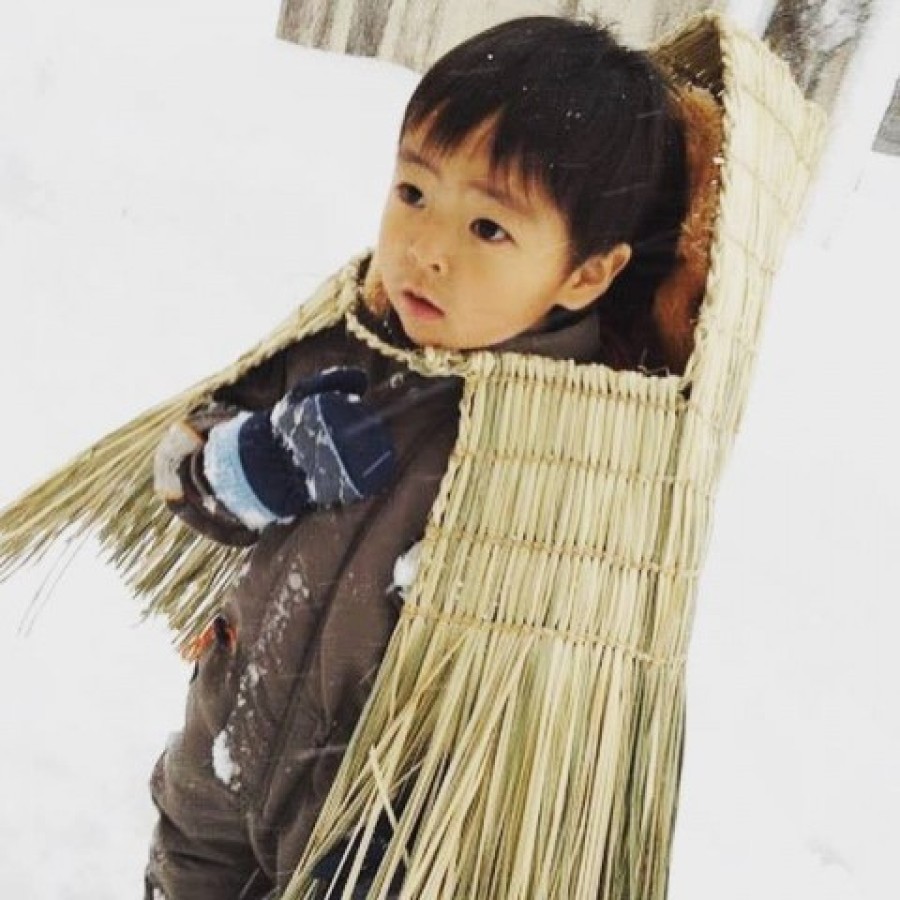
Snowball fights, sledging, skiing. When winter came, I would build snow sculptures with my friends and practise cross-country skiing in the snow every day. When I was at primary school, I used to walk to school along a path flanked by walls of snow. Snow was simply there; it was a natural part of life.
But as I grew up, I came to understand what life is like in regions without snow.
It was only then that I realised that shovelling snow every morning is a chore that people living in snow-free areas simply don’t have to deal with. Neither the traffic jams nor the dangers of clearing snow from the roof were things I’d ever taken for granted. It was only after I’d seen the outside world that I realised just how much of a nuisance snow can be.
However, when I took someone from outside the region to a snowy part of the country, the exact opposite happened.
The first time I invited a friend from Taiwan to Niigata, they stood in the snow wearing sandals in the depths of winter and said, ‘That whiteness falling from the sky is the whiteness of God.’ They meant every word.
When I was showing some travellers from Indonesia around, they asked me, ‘Is it OK if we have a dive in this snow?’ I replied, ‘Of course, go ahead,’ and they cancelled their next planned activity and started diving into the snow. The laughter just wouldn’t stop.
For someone from a world without snow, snow is simply thrilling. The whiteness that we’ve come to take for granted—and thus no longer notice—appears to an outsider’s eye as the colour of the divine.
At that moment, I thought to myself: ‘Thank goodness the snow isn’t black.’
As I watched this unfold, another question came to mind. Why, in the first place, have people continued to live in such a region of heavy snowfall?
There are records showing that snowfall in Yamakoshi exceeded 5 metres during the Shōwa era. Just imagining what life must have been like with 5 metres of snow is enough to make one’s head spin. Yet people have continued to live there.
Along the snow-covered regions of Niigata, Jōmon pottery dating back some 5,000 years has been unearthed. The fact that people have continued to live in this snowy region is neither a matter of stubbornness nor mere habit. The reason lay in the snow itself.
When spring comes, the snow melts into water. That water nourishes the rice, and from it, sake is born. Come winter, people learn the art of preservation. It is precisely because they are cut off by the snow that people help one another. When someone has cleared a path, they call out ‘Thank you for your hard work’ as the drinking party begins. Such scenes have long been a part of life in snow-covered regions.
When you think about it that way, snow is not merely a meteorological phenomenon. It is a force that has shaped the very fabric of life in snow-covered regions.
Snow is a nuisance.
But at the same time, snow is a blessing.
Although these two things may seem to contradict each other, both are true. The reason people have continued to live on this land, despite its hardships, is that it has been blessed with snow.
I once transported that snow in the height of summer.
On the day of the Nagaoka Fireworks Festival in August, we loaded 10 tonnes of snow onto a lorry and took it to the venue. When we laid out the snow under the blazing sun, with temperatures exceeding 30 degrees, children who had come to watch the fireworks and had been at the venue since the morning began to gather around. Children who had never touched snow before reached out, their eyes wide with wonder.Under the blue summer sky, some of the children were building snowmen.
The snow, which was there as a matter of course every year, brought a smile to everyone’s face that day.
I’ve also made another product using snow.
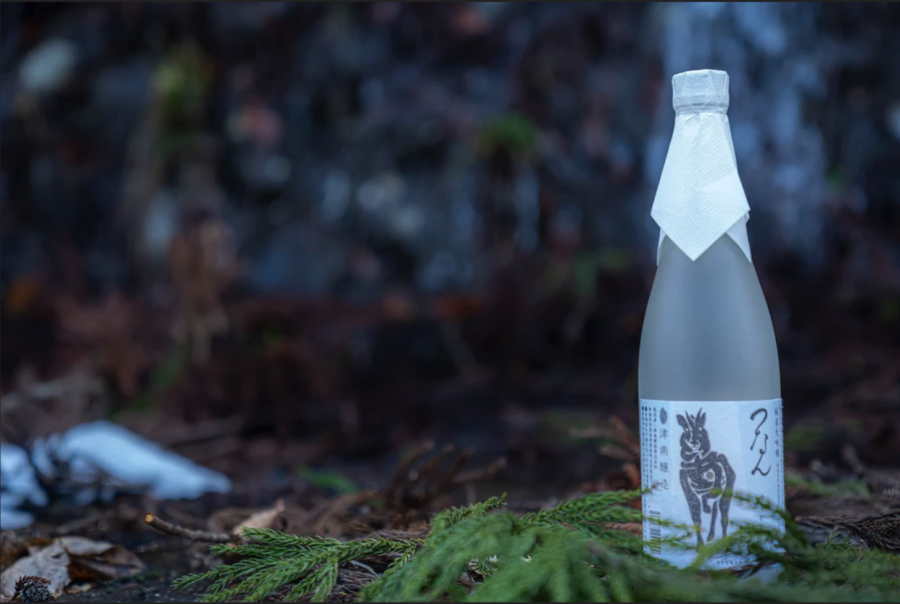
It is a product called the ‘Gōsetsu Set’, in which freshly fallen snow is packed into a box and sake is buried inside it before being delivered nationwide. Recipients who receive the powdery snow via the Cool Takkyubin delivery service must dig through it to uncover the sake hidden within.
Digging a bottle of sake out of the snow. That experience comes through, along with the winter air of Niigata.
A scene that is commonplace in snowy regions comes as a surprise to those who have never seen snow before. What was once a nuisance becomes a gift; what was once a burden turns into a source of joy.
The same snow looks completely different depending on the angle from which you view it.
From the perspective that ‘snow is a nuisance’, there is nothing but a battle against it. From the perspective that ‘snow becomes spring water’, snow is a natural dam. From the perspective that ‘snow is delivered in summer’, snow becomes an experience that transcends the seasons. From the perspective that ‘sake slumbers within the snow’, snow becomes the setting for a story.
When your perspective changes, the question changes. When the question changes, the answer changes. Yet the snow itself remains exactly the same.
It wasn’t that I was wrong to find the snow a nuisance. Shovelling snow is hard work, and accidents do happen. Snow really is a nuisance. On the other hand, snow turns to water, nurtures sake, and gives rise to culture.
It is both a hindrance and a blessing. It is not a case of one being right and the other wrong. Within the same snow, there are multiple truths.
When we talk about ‘changing our perspective’, it sounds as though we are abandoning our current way of seeing things and switching to a different one. But I don’t actually think that’s the case. It’s about retaining our current perspective—which remains valid—whilst adding another perspective to it. The world is made up of multiple truths, and they are all genuine.
Some people see snow as a nuisance. Others see it as a blessing. It is not that one view is right and the other is wrong. It is simply that, whilst looking at the same thing, they see different truths.
When we can see only one truth, we tend to feel that the other person is wrong. However, once we become able to see multiple truths, we begin to understand: ‘Ah, so that’s the aspect you’re seeing.’ When people look at the same thing but say different things, it is not because one of them is lying, but because they are seeing different layers of it.
This isn’t just about snow. The same thing happens in community development, business and personal relationships. Rather than arguing over a single correct answer, we must recognise that multiple truths overlap. That is the starting point for dialogue.
How many truths can you discover whilst looking at the same snow? Even if two people are standing in exactly the same spot, the world they see is completely different: one sees only one truth, whilst the other sees several. The more truths you can see, the richer the world becomes.
In fact, everything we’ve looked at so far has been about ‘changing one’s perspective’.
Viewing water not as a flood, but as a cycle. Experiencing the Nagaoka Fireworks not as mere information, but as a lived experience. Viewing experience not as something to be used up, but as an asset. Seeing a walnut shell as something one simply cannot ignore.
In each of these stories, shifting one’s perspective has revealed things that were previously unseen.
Keeping an open mind also means remaining open to the possibility that you might be wrong.
We are creatures who crave definitive answers. When we decide that ‘this is the right way’, we feel reassured. Yet neither communities, nor people, nor nature can be explained by a single answer.
Whether we’re looking at snow or fireworks, what each person sees is different. Everyone is seeing the truth. That’s why I don’t want to let go of the feeling that ‘there might be another way of looking at things’.
When you live in a snowy region, people sometimes ask, ‘Why do you live in such a difficult place?’ I have no intention of arguing with them. It really is inconvenient. But there are views you can only see there.
Every time, I reply: ‘It’s because my daily life is both incredibly tedious and fascinating.’
The snow will fall in Nagaoka again this year. It’s the same snow as when I was a child. Yet the way I see it is completely different from back then. And even now, I have a feeling there is still some snow that I haven’t yet seen.
I suppose it’s not just the snow. I think there are truths in this world that we haven’t yet seen.
ATSUSHI KABASAWA
FARM8 Co. Ltd.,
Next Chapter: ‘Regions That Become Constellations’ – Chapter 13 : Creating Businesses That Benefit the Region