
We’ve reached an age where we look up information before trying something out.
I open Tabelog before going to a restaurant. I read reviews before deciding where to go on holiday. I check the ratings before watching a film. Information comes first, and the experience follows. Or perhaps we end up thinking we’ve had the experience based on the information alone.
That in itself is not a bad thing. It is sensible to use information to avoid making a bad choice. However, there is one major limitation to this habit of prioritising information.
No matter how accurate the information you provide, it cannot match the experience itself.
I really feel the full force of this limitation when I try to explain to someone something that I take for granted.
For me, having grown up in Nagaoka, fireworks were a regular feature of every summer.
Ever since I can remember, as soon as August rolls around, I’ve gone to watch the fireworks. The deep, rumbling sound that resonates in my stomach, the light that fills the night sky, and the cheers of the people around me. That, to me, is the Nagaoka Fireworks Festival. Even before I learnt about its history and scale as facts, I knew it in my bones.
That’s why, whenever I try to explain the Nagaoka Fireworks to someone who’s never heard of them, I always feel as though words aren’t enough.
One million visitors. One of Japan’s three great fireworks displays. It began as a tribute to the dead and a prayer for reconstruction. I can convey that information. But when people hear it and say, ‘Oh, that’s impressive,’ then what I really want to convey hasn’t got through.
In the end, the only thing I can say is, ‘Why don’t you come and see for yourself?’
The moment the ‘Phoenix’—which has become synonymous with the Nagaoka Fireworks Festival—begins, the atmosphere throughout the venue changes. Light fills the sky, and a sound that resonates deep within your chest reaches your ears. Everyone present looks up in the same direction.You may find yourself instinctively exchanging glances with a stranger standing next to you. That atmosphere simply cannot be conveyed through a video. When you try to put it into words, something is inevitably lost. I believe that what is etched into one’s very being cannot be fully translated into mere information.
Although information and experience deal with the same subject matter, they are completely different.
Information is ‘knowing’. Experience is ‘feeling’. Knowing and feeling are different. This difference may seem simple, but it actually has a profound impact.
For those who have seen the Nagaoka Fireworks on video and those who have actually experienced the sound of them at the venue, the ‘Nagaoka Fireworks’ refer to different things. Even though they use the same words, the images in their minds are fundamentally different. That is why they sometimes find they cannot see eye to eye.
There are aspects of an experience that cannot be conveyed through information alone.
However, information without experience is like having a map but never going on a journey.
This story is a continuation of the previous chapter.
Invisible forces cannot be conveyed through information alone. Thinking ‘that’s amazing’ after reading about the hand-dug tunnel in Yamakoshi is a completely different experience from actually standing in front of that rock face. Trust, memories and a love for one’s homeland can all be explained in theoretical terms, but they can only be truly felt through direct experience.
It is only through experience that meaning becomes something of one’s own, separate from mere information.
The phrase ‘receiving life’, as I read it in a book, carries a different weight to the same phrase as experienced by someone who has actually reared animals at an agricultural college and seen them through to slaughter. The story about the agricultural college that I wrote about in Chapter One also illustrates how experience transforms information into something genuine.
The same applies to the value of a local area.
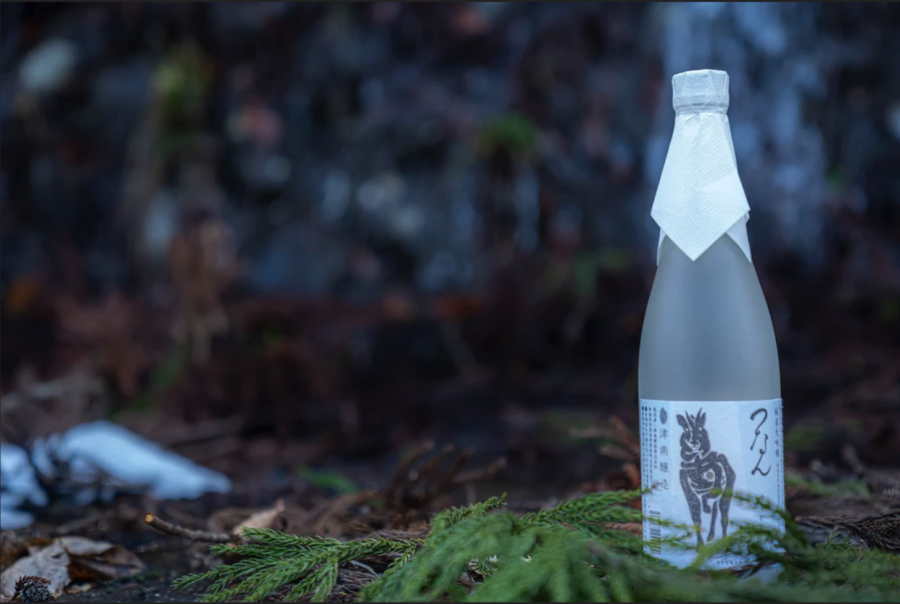
There is a difference in the weight of the phrase ‘light and dry’ between someone who knows Niigata sake by that description and someone who has stood in a brewery in winter, sipping sake whilst taking in the atmosphere of the brewing process. Similarly, the meaning of the term ‘terraced rice fields’ differs between someone who has seen them in photographs and someone who has actually harvested rice there.
It is only through experience that information takes on meaning.
However, not everyone who has had such an experience is able to put it into words.
Having grown up in Nagaoka, I know the value of fireworks first-hand. However, in order to convey this to people from outside the area, I need to translate it into information. Turning experience into information is the way to share the value of our region with the wider world.
Conversely, when visitors take their experiences home with them, the information about the local area becomes authentic.
There is a saying that ‘seeing is believing’, but in this day and age, that might not quite be the case. I feel it would be more accurate to say that ‘a hundred viewings are no substitute for a single experience’. No matter how many videos or photographs you look at, they cannot compare to the actual experience.
Anyone who has experienced the fireworks will come back again next year.
People who only know about it from hearsay might think, ‘It’ll be crowded, so perhaps I’ll give it a miss.’ But for those who’ve experienced it, there’s a reason they want to feel that sound and those vibrations all over again.
Information leads to understanding. But experience creates memories.
Information alone does not motivate people. It is only when they have experienced something that they are motivated to act.
The meaning cannot be conveyed through an explanation alone. It only becomes your own when you experience it for yourself.
ATUSHI KABASAWA
FARM8 Co. Ltd.,